Trinity College Chapel Reflection No 1
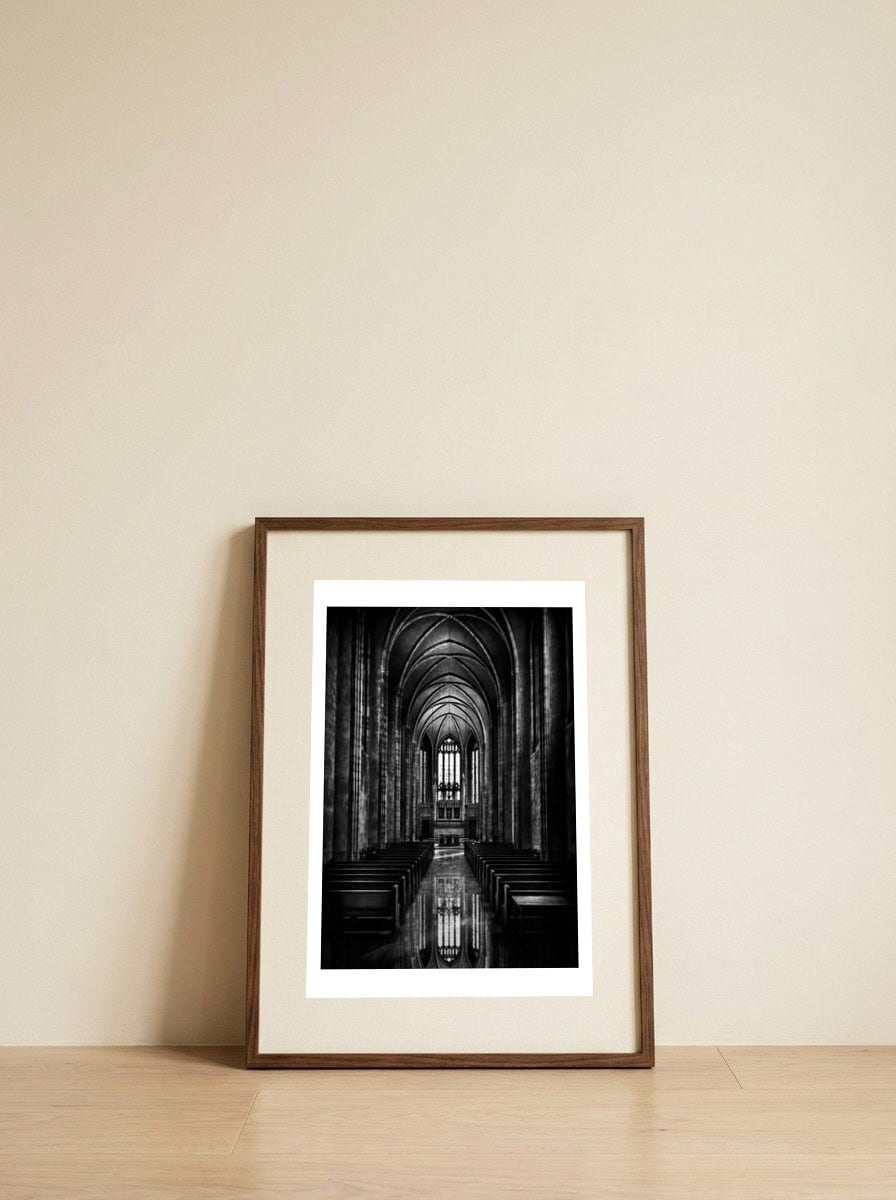
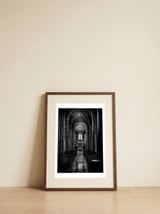
The Learning Curve PhotographyBrian Carson of The Learning Curve Photography captures the solemnity of Toronto’s Trinity College Chapel through a lens of architectural symmetry and digital manipulation. This monochrome study anchors the viewer at the northern entrance, drawing the eye down a mirrored nave toward the southern pulpit in a rhythmic display of light and shadow.
Trinity College Chapel Reflection No 1
Brian Carson of The Learning Curve Photography captures the solemnity of Toronto’s Trinity College Chapel through a lens of architectural symmetry and digital manipulation. This monochrome study anchors the viewer at the northern entrance, drawing the eye down a mirrored nave toward the southern pulpit in a rhythmic display of light and shadow.
28 × 35 cm · about ⅙ the width of a 3-seat sofa
A meaningful share of this purchase goes directly to The Learning Curve Photography.
Every Arthaus piece supports a living artist.
Trinity College Chapel Reflection No 1
The Learning Curve Photography
Art Analysis
From the artist, The Learning Curve Photography
Interior of The Trinity College Chapel at No 6 Hoskin Ave in Toronto Canada. View from the entrance way to the chapel on the north end towards the pulpit at the south. Original photography using a Canon EOS 60D body with a Sigma 17-70mm f2.8 DC Macro OS lens and Silver EFEX Pro as a Lightroom plugin for the Black and White conversion. Reflection effect added in Photoshop. Brian Carson The Learning Curve Photography https://linktr.ee/thelearningcurvephotography
A Mirrored Journey Through Gothic Architecture and Light
In this composition, Carson utilizes a Canon EOS 60D and a Sigma 17-70mm lens to document the historic interior of the Trinity College Chapel at 6 Hoskin Avenue. The conversion to black and white via Silver EFEX Pro strips away the distractions of color, emphasizing the gothic textures of the stonework and the deep tonal range of the wooden pews. By focusing on the structural bones of the space, the artist highlights the interplay between the physical architecture and the atmosphere of quietude found within the walls.
The defining characteristic of this piece is the reflection effect introduced during post-processing, which creates a liquid-like floor that doubles the chapel’s verticality. This mirrored perspective turns a traditional architectural photograph into a surrealist exploration of symmetry. The portrait orientation reinforces the height of the vaulted ceilings, while the dark, rich blacks and crisp whites provide a graphic clarity that honors the historical weight of the Canadian landmark.
The composition uses a central perspective and a digital reflection to create a balanced, mirrored view of the chapel's interior.
The use of Silver EFEX Pro creates a high-contrast black and white palette that emphasizes texture and structural form.
The piece captures the enduring character of the Trinity College Chapel, rooting the digital manipulation in a real-world heritage site.
Free Shipping
On all framed orders
100-Day Guarantee
Love it or return it
Gallery Quality
Museum-grade materials
Artist-Direct
Fair pay, every piece
More to Discover
More from The Learning Curve Photography
ArtistMore of The Learning Curve Photography’s work, hand-picked from the collection.